Introduction
Have you noticed that AI tool names are becoming increasingly catchy? Since the rise of “Lobster” (OpenClaw), many AI products have started to adopt animal and anthropomorphic names. This trend reflects the rapid iteration of AI capabilities and the clearer differentiation in product positioning. As giants like ByteDance, Tencent, and Meta accelerate their strategies, AI’s role is evolving from mere conversation to practical productivity.
Today, we will delve into four noteworthy AI tools: Coze, Manus, ima Copilot, and OpenClaw, to see which one can best assist you.
Quick Overview of the Four Tools
-
Coze: Developed by ByteDance, Coze is an AI Bot development platform that emphasizes low-code/no-code solutions for quickly building custom AI applications. It allows for one-click publishing across multiple channels like Douyin, Feishu, and WeChat, functioning as an “AI application building workshop”.

-
Manus: Created by the Chinese startup Monica, Manus is a general-purpose AI agent capable of independent thinking, planning, and executing complex tasks. It is touted as the “world’s first general AI agent”. After being acquired by Meta, it acts like a super intern with a “cloud computer” ready to deliver complete results based on your commands.

-
ima Copilot: Produced by Tencent, ima Copilot is an AI knowledge management workstation known for its integrated search, reading, and writing capabilities. It helps manage, digest, and utilize personal knowledge bases, providing accurate information with source citations, making it your “personal knowledge manager”.

-
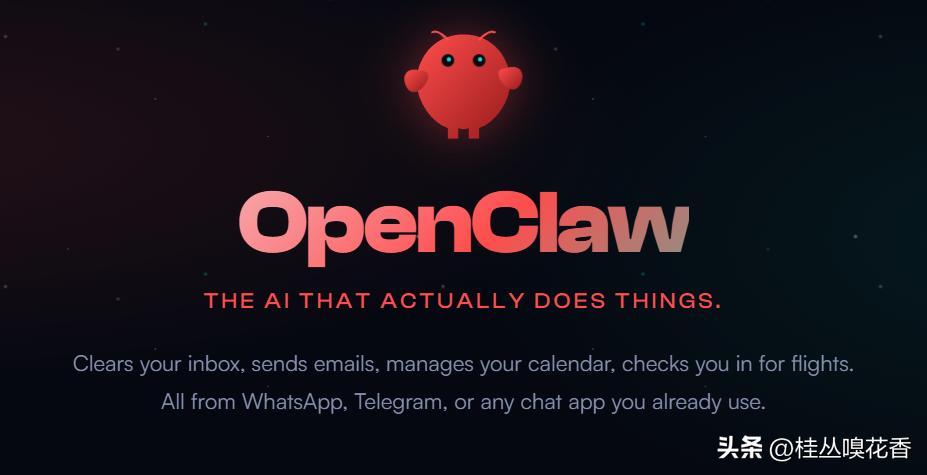
OpenClaw: Launched by Austrian engineer Peter Steinberger in November 2025, OpenClaw is an open-source AI agent framework. It serves as a central hub connecting large models with local systems, and its open-source nature significantly lowers the barrier for individuals and businesses to build their own AI assistants, evolving into a vast ecosystem akin to the “Android system” of the AI world.
The Powerhouses of AI
The competition in the AI tools sector resembles an arms race. From 2024 to 2026, products like Coze, Manus, ima Copilot, and OpenClaw emerged, each backed by strong companies, representing different directions in the evolution of AI from a “chat tool” to a “productivity partner”.
Coze was launched by ByteDance on February 1, 2024, focusing on “no-code” and “low-threshold” solutions. While users were still chatting with GPT-4, Coze empowered ordinary users to create AI applications, and on January 19, 2026, it released an upgraded version, Coze 2.0.
Manus followed in March 2025, claiming to be the “world’s first general AI agent”. Its launch was a significant event in the AI community, making the concept of “AI Agent” more widely recognized.
ima Copilot was introduced by Tencent on November 15, 2024, focusing on a knowledge-base-centric AI workstation. On April 29, 2026, it launched a new copilot agent mode, marking its transition from a “tool” to a “partner”.
OpenClaw, developed by Peter Steinberger, was open-sourced in November 2025 under a friendly MIT license and underwent brand rebranding in early 2026. This “external open-source monk” sparked a wave of interest in the domestic AI community, with over 230,000 stars on GitHub.
Understanding Key Terms: Bot, Agent, and Intelligent Agent
Before comparing these tools, let’s clarify some commonly confused terms:
-
Bot: Initially referred to programs that answered preset questions in chat applications. In the AI era, bots function as specialized chat windows, like automated customer service responses.
-
Agent/Intelligent Agent: Unlike bots, agents can think and perform tasks. They act as a “digital brain” capable of planning, decision-making, and executing multi-step tasks, adapting based on environmental feedback.
For example, a bot is like a housekeeper who cleans upon request, while an agent is like a personal assistant who organizes a dinner party based on your preferences.
In-Depth Analysis of Each AI Tool
Coze: Build AI with Ease
If you’re a beginner wanting to create a smart customer service bot, Coze can help. You can describe your needs in natural language, like “I want to create an English learning companion”, and Coze will generate a basic bot based on your description.
With over 60 built-in plugins for various functionalities, including information reading and office efficiency, you can quickly enhance your bot. Once created, you can publish it across multiple platforms like Feishu and WeChat, achieving “one-time development, multi-channel use”.
Coze 2.0’s Agent Plan feature allows AI to evolve from a simple Q&A tool to a sustainable intelligent agent that can continuously execute tasks and report back based on set goals.
Manus: Direct Action
As the “world’s first general AI agent”, Manus, meaning “hand and mind” in Latin, addresses the limitation of language models that lack execution capabilities.
Using Manus is straightforward. You simply give it a command, such as “Help me analyze the annual reports of these 10 companies and compile a comparison table”. Manus will understand the task, autonomously plan, search online, write code, and process data, delivering the complete document directly to you. In the GAIA benchmark test, Manus outperformed similar models from OpenAI, showcasing its strong capabilities.
From impressive demonstrations to evolving paid and open strategies, Manus is working to translate the “AI concept” into “AI productivity”.
ima Copilot: Your Knowledge Manager
This tool focuses on precision rather than breadth. Its core function is integrated search, reading, and writing. You can feed it various documents, web pages, and notes, and it will compile them into a high-energy knowledge base.
Based on this base, you can ask questions, and it will provide accurate answers with citations, acting like a personal assistant familiar with all your materials. Its deep personalization memory system learns your habits, preferences, and work style, becoming more attuned to your needs over time.
If you need to draft a report based on last week’s meeting notes or analyze a technical document, ima Copilot will impress you with its performance. Its carefully crafted Skills ecosystem includes customized skills for different scenarios, enhancing the personalized experience.
OpenClaw: Revitalizing the AI Ecosystem
OpenClaw is praised for its advantages of being open-source, free, and prioritizing local execution. Users can issue simple natural language commands to let large models operate their computers and process files without needing programming knowledge.
Its open-source nature and highly modular architecture have led major cloud providers like Tencent Cloud, Alibaba Cloud, and Huawei Cloud to offer “one-click deployment” services for OpenClaw. AI model companies like Zhizhu AI, Kimi, and MiniMax have launched exclusive subscription packages around it. Even smartphone manufacturers like Xiaomi and Honor have begun to offer system-level “mobile lobster” applications. OpenClaw has evolved into a new AI ecosystem.
Competitive Analysis: Meeting Your AI Needs
Now, let’s evaluate these four top performers from different perspectives:
In terms of general task scenarios, if you need a comprehensive automation executor, Manus is a top choice, capable of handling everything from data analysis to programming delivery. Coze’s strengths lie elsewhere, scoring lower in community evaluations compared to Manus. However, for non-technical users, Coze and ima Copilot excel with their low entry barriers and quick onboarding, making them suitable for lightweight tasks.
For knowledge asset management, ima Copilot stands out as a superior option. It can organize your private knowledge base and provide precise answers based on content, efficiently generating well-sourced long documents. In this regard, the other three tools fall short.
Regarding privacy and control, OpenClaw is the clear winner as it allows for complete private deployment without transmitting sensitive data. Both ima Copilot and Coze store information in the cloud, while Manus operates on a temporary task basis, offering a lower level of privacy.
In terms of ecosystem richness, OpenClaw currently has the most vibrant potential, thanks to its open-source community and the influx of cloud providers. Coze is deeply integrated with ByteDance’s ecosystem, but it may still have room to catch up in terms of independent open-source ecosystems.
Concerning industry support and sustainability, Manus’s acquisition by Meta raises concerns about potential changes in API strategies or pricing. Coze and ima Copilot are backed by ByteDance and Tencent, respectively, making them less likely to disappear overnight. OpenClaw’s sustainability relies heavily on community and cloud computing providers.
Conclusion
Each AI tool has its strengths, and your needs will determine the best choice.
If you are a developer seeking flexibility and control, OpenClaw may be your best option. If you want to effectively manage a vast private knowledge base, ima Copilot is indispensable. For those looking to quickly create interesting AI applications without coding, Coze is the way to go. If you prioritize task automation and data analysis, Manus is definitely worth trying.
From “chatting” to “doing work”, AI is gradually integrating into our workflows. Understanding your true needs can help these four tools shine in their respective fields, enabling you to navigate the future digital work era with ease. Are you ready?
Comments
Discussion is powered by Giscus (GitHub Discussions). Add
repo,repoID,category, andcategoryIDunder[params.comments.giscus]inhugo.tomlusing the values from the Giscus setup tool.